Monday, December 24, 2018

New Classification of cupping therapy types 2018


This updated classification of cupping therapy types categorized cupping therapy into five categories. The first category is “technical types”, which includes dry, wet, massage, and flash cupping. The second category is “power of suction”, which includes light, medium, strong and pulsatile cupping. The third category is “method of suction”, which includes fire, manual vacuum, and automatic vacuum cupping. The fourth category is the “added therapy”, which includes herbal, water, ozone, moxa, needle, laser, electrical stimulation, aquatic and magnetic cupping. The fifth category is “condition and area treated”, which includes cosmetic, sports, pedi, facial, abdominal, female, and male cupping. 

The full article:


Tuesday, November 13, 2018

Enciclopedia de la Ventosaterapia: Una Nueva Edición (Spanish Edition)

Este libro describe la historia, los métodos y las técnicas de la Ventosaterapia y proporciona pautas prácticas para el uso en el hogar y la práctica profesional de la ventosaterapia. Brinda una nueva clasificación de los tipos de ventosaterapia, sets de ventosaterapia y una clasificación de los efectos adversos de la ventosaterapia. Analiza de cerca los problemas de mecanismo de acción, efectos secundarios, programas de tratamiento y seguridad. Contiene muchas ilustraciones claras y proporciona una guía práctica para tratar muchas enfermedades comunes. Incluye nuevas investigaciones científicas y ejemplos clínicos. Este libro puede servir como una referencia útil para terapeutas de medicina complementaria y alternativa para médicos, estudiantes de medicina, profesionales de la salud, investigadores y personas interesadas en la salud natural, la medicina integral, el autocuidado y el tratamiento.


Enciclopédia de Ventosaterapia - Nova Edição (Portuguese Edition)

Este livro descreve a história, métodos e técnicas de ventosaterapia e fornece orientações práticas para uso doméstico da ventosaterapia e prática profissional. Fornece uma nova classificação dos tipos de terapia com ventosa, conjuntos de terapia com ventosas e uma classificação dos eventos adversos da ventosaterapia. Analisa atentamente as questões do mecanismo de ação, efeitos colaterais, programas de tratamento e segurança. Contém muitas ilustrações claras e fornece uma diretriz prática para o tratamento de muitas doenças comuns. Inclui novas pesquisas científicas e exemplos clínicos. Este livro pode servir como uma referência útil para terapeutas de medicina complementar e alternativa, médicos, estudantes de medicina, profissionais de saúde, pesquisadores e pessoas interessadas em saúde natural, medicina integrativa, autocuidado e tratamento.

Encyclopédie de la thérapie par ventouses: Une nouvelle édition (French Edition)


Ce livre décrit l’histoire, les méthodes et les techniques de la thérapie par ventouse et fournit des directives pratiques sur l’utilisation à domicile et la pratique professionnelle de la thérapie par ventouse. Il fournit une nouvelle classification des types de traitement par ventouse, des sets de traitement par ventouse et une classification des événements indésirables liés au traitement par ventouse. Il examine de près les questions de mécanisme d’action, d’effets secondaires, de programmes de traitement et de sécurité. Il contient de nombreuses illustrations claires et constitue un guide pratique pour le traitement de nombreuses maladies courantes .Il comprend de nouvelles recherches scientifiques et des exemples cliniques. Ce livre peut servir de référence utile aux thérapeutes en médecine complémentaire et alternative, aux médecins, aux étudiants en médecine, aux professionnels de la santé, aux chercheurs et aux personnes intéressées de la santé naturelle, la médecine intégrative, les soins personnels et le traitement.


Wednesday, October 3, 2018

Ventousothérapie : Aperçu du point de vue de la médecine moderne


Ventousothérapie : Aperçu du point de vue de la médecine moderne


Dr. Tamer S. Aboushanab, Dr. Saud AlSanad
La ventousothérapie est une ancienne pratique de médecine traditionnelle et complémentaire. Il existe de plus en plus de preuves de ses avantages potentiels dans le traitement de certaines maladies, en particulier les affections liées à la douleur. Il est très important de suivre les mesures de prévention des infections dans la ventousothérapie. Ce document proposait une nouvelle classification de sets de ventousothérapie, une nouvelle classification des effets indésirables de la ventousothérapie et une classification mise à jour des types de ventousothérapie.


Pour citer cet article:
Aboushanab TS, AlSanad S, Ventousothérapie : Aperçu du point de vue de la médecine moderne, journal d'acupuncture et études méridiens (2018), (Inglés). doi: 10.1016 / j.jams.2018.02.001.

Ventosaterapia: Una Visión General Desde Una Perspectiva Médica Moderna


Ventosaterapia: Una Visión General Desde Una Perspectiva Médica Moderna

Dr. Tamer S. Aboushanab, Dr. Saud AlSanad

La ventosaterapia es una antigua práctica de medicina tradicional y complementaria. Cada vez hay más pruebas de sus beneficios potenciales en el tratamiento de algunas enfermedades, especialmente las relacionadas con el dolor. Seguir las medidas de control de infecciones es un componente muy importante de la práctica de la ventosaterapia. Este documento sugiere una nueva clasificación de los conjuntos de la ventosaterapia, una nueva clasificación de los eventos adversos de la ventosaterapia y una clasificación actualizada de los tipos de ventosaterapia.


Por favor cite este artículo como:
Aboushanab TS, AlSanad S, Ventosaterapia: Una Visión General Desde Una Perspectiva Médica Moderna, Periódico de Acupuntura y Meridian Studies (2018), (Inglés). doi: 10.1016 / j.jams.2018.02.001.

Thursday, April 26, 2018

Cupping therapy simulation

A9 Development of a new tool for self-assessment of confidence, expectations/satisfaction and performance for cupping therapy simulation training modules

Tamer Aboushanab, Mohammed Khalil, Ahmed El-Olemy, Saud AlSanad


National Center for Complementary and Alternative Medicine, Ministry of Health, Riyadh, Saudi Arabia

Background: Simulation is considered a safe training method. Simulation training technology is a popular method of learning for healthcare professionals worldwide [1]. It includes performing a medical procedure on simulators to increase the confidence and skills of trainees before conducting the procedures on humans [2]. Cupping therapy (Hijama) is a widely used traditional healing therapy which is performed by applying cups on selected body points by sucking air to induce sub-atmospheric pressure inside the cup either by heat or suction [3]. The use of simulation in cupping therapy training was an innovation developed by National Center for Complementary and Alternative Medicine (NCCAM), Ministry of Health (MOH), Saudi Arabia [4]. There is no available validated evaluation tools for assessment of cupping simulation learning due to the novelty of this method. An internal committee of NCCAM, Saudi Arabia developed this questionnaire, as a part of the evaluation process of their training courses.
Objectives: To discuss the development of a new tool which can be used for evaluation of cupping therapy simulation-based learning.
Methods: Fifteen items in the questionnaire were divided into three scales. The three scales were confidence, expectations/satisfaction, and performance. Each scale included five questions and used 5 Likert scale responses from 1 to 5 [Fig. 1]. Statistical Package for Social Sciences (SPSS) Software Version 20 was used for data entry, management and analysis. Internal reliability of the questionnaire and scales was evaluated by Cronbach's alpha test.
Results: 50 healthcare professionals participated in the study. They were selected from the trainees of the simulation courses provided by NCCAM as a part of the program’s evaluation. Cronbach's alpha of items deleted were ranged from 0.91 to 0.92 for each item. Cronbach's alpha of confidence scale was 0.85, expectations/satisfaction scale was 0.81, performance scale was 0.94, and total evaluation was 0.92. These values showed good internal consistency of the scales.
Conclusion: Cupping Simulation Training Evaluation Questionnaire (CSTEQ) is a promising new tool for evaluating self-reporting of confidence, expectations/satisfaction and performance of trainees. It may be used as a tool for improvement of cupping simulation training programs. Further large scale trials, and validation studies should be conducted.
Source: https://advancesinsimulation.biomedcentral.com/articles/10.1186/s41077-018-0065-6

Thursday, April 12, 2018

Genetic Theory – A Suggested Cupping Therapy Mechanism of action

Genetic Theory – A Suggested Cupping Therapy Mechanism of action

Tamer Shaban, Munir Ravalia

Abstract:
The Cupping Therapy mechanism of action is not clear. Cupping may increase local blood circulation, and may have an immunomodulation effect. Local and systemic effects of Cupping Therapy were reported. Genetic expression is a physiological process that regulates body functions. Genetic modulation is a reported acupuncture effect. In this article, the authors suggest genetic modulation theory as one of the possible mechanisms of action of cupping therapy.


Tamer, S. Aboushanab, and Ravalia Munir. "Genetic Theory–A Suggested Cupping Therapy Mechanism of Action." (2017).

Link to the presentation: https://f1000research.com/slides/6-1684
Link to full text: https://dlc.dlib.indiana.edu/dlc/bitstream/handle/10535/10328/Genetic%20Theory2.pdf?sequence=1&isAllowed=y

Monday, April 9, 2018

Cupping Therapy Effects Diagram

Cupping Therapy Effects Diagram

By Dr. Tamer Shaban

Any one can use this diagram for any reason without alteration with these rules:
1- Proper citation and credit To Dr. Tamer Shaban
2-No alteration of the diagram
3-Recommended citation (Tamer Shaban, Cupping Therapy Effects Diagram, available online at: http://www.acupuncturecupping.org )

Monday, March 19, 2018

New published article: Cupping Therapy: An Overview from a Modern Medicine Perspective

Cupping Therapy: An Overview from a Modern Medicine Perspective

Abstract

Cupping therapy is an ancient traditional and complementary medicine practice. Recently, there is growing evidence of its potential benefits in the treatment of pain-related diseases. This article gives an overview of cupping therapy practice. Furthermore, this article suggests a new classification of cupping therapy sets, a new classification of cupping therapy adverse events, and an updated classification of cupping therapy types.

Cupping Therapy Encyclopedia: New Edition 2018 - Paperback

Cupping therapy Encyclopedia 2018 Edition

This book describes the history, methods, and techniques of cupping therapy and provides practical guidelines for cupping therapy home use and professional practice. It provides a new classification of cupping therapy types, cupping therapy sets, and a classification of cupping therapy adverse events. It looks closely at issues of mechanism of action, side effects, treatment programs, and safety. It contains many clear illustrations and provides a practical guideline for treating many common diseases. It includes new scientific research and clinical examples. This book can serve as a useful reference for complementary and alternative medicine therapists, medical physicians, medical students, healthcare professionals, researchers, and people interested in natural health, integrative medicine, self-care, and treatment.


Buy Now
http://amzn.to/2GmD9to

Thursday, March 30, 2017

Is Cupping Therapy a pseudoscience?

Is Cupping Therapy a pseudoscience?

Dr.T.Shaban

Wikipedia described cupping therapy as a pseudoscience. It also characterized acupuncture is a pseudoscience. But both clearly are not a pseudoscience. Dr Mike Cummings replied: ‘Acupuncture’ is clearly is not pseudoscience; however, the way in which it is used or portrayed by some may on occasion meet that definition. Acupuncture is a technique that predates the development of the scientific method.(1) 
And cupping which also stimulates acupoints, clearly not a pseudoscience. Its practice is dated back to over 3500 years and practiced by most of the human civilizations. So, it is unfair to called this ancient practice a pseudoscience. 
Dr Mike added: "It would be better to use a less pejorative classification within the bracket of history when referring to acupuncture and other ancient East Asian medical techniques. The contemporary use of acupuncture within modern healthcare is another matter entirely, and the fact that it can be associated with pre-scientific medicine does not make it a pseudoscience."(1)

Systematic reviews, clinical randomized clinical trials support the effectiveness and safety of cupping therapy.

In 2015 review of systematic reviews, the researchers concluded that: "Cupping may be beneficial for pain-related conditions such as: herpes zoster, low back pain, and other conditions like: acne, and facial paralysis.(2) and in 2016 systematic review, the researchers concluded: "Cupping can be used for musculoskeletal pain, neck pain, Carpal tunnel syndrome, and brachialgia.(3)


References:
1-Mike Cummings - Is acupuncture pseudoscience? http://blogs.bmj.com/aim/2016/12/30/is-acupuncture-pseudoscience/

2-Cao, H., Han, M., Zhu, X., & Liu, J. (2015). An overview of systematic reviews of clinical evidence for cupping therapy. Journal of Traditional Chinese Medical Sciences, 2(1), 3-10.

3-Al Bedah, A. M., Khalil, M. K., Posadzki, P., Sohaibani, I., Aboushanab, T. S., AlQaed, M., & Ali, G. I. (2016). Evaluation of Wet Cupping Therapy: Systematic Review of Randomized Clinical Trials. The Journal of Alternative and Complementary Medicine, 22(10), 768-777.
  

Thursday, August 11, 2016

Classification of Cupping Therapy: A Tool for Modernization and Standardization


Cupping research 

Classification of Cupping Therapy: A Tool for Modernization and Standardization

 Abdullah Mohammed Al-Bedah1, Tamer Shaban Aboushanab2*, Meshari Saleh Alqaed2, Naseem Akhtar Qureshi2, Imen Suhaibani2, Gazzaffi Ibrahim2 and Mohammed Khalil2

Abstract
Cupping therapy is one of the oldest healing methods and practiced by ancient Chinese, Egyptians and Greeks. There are many types of cupping therapy and recently, practitioners and researchers have added more types to the practice of cupping. This research aimed to classify types of cupping to help in modernization and standardization of cupping therapy. This proposed classification of cupping therapy that might guide researchers stay organized, help them to differentiate and compare various types, raise their knowledge of cupping and precisely clarify cupping types terms  and methods related to research in future. The proposed classification of cupping into six main categories will also help the field of cupping therapy in uniform training of concerned therapists.

Keywords :

Cupping therapy; classification; cupping research; training; standardization; modernization.

Tuesday, August 9, 2016

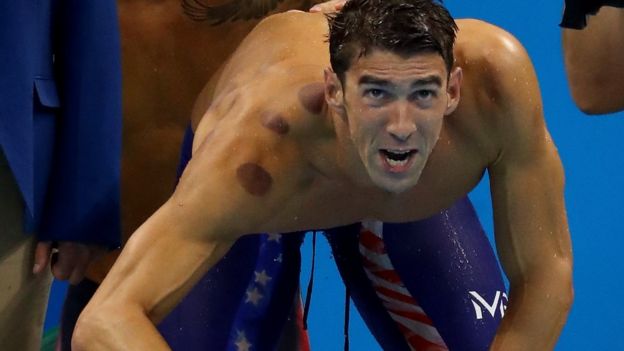
Michael Phelps, USA Olympic athletes and cupping in Rio 2016


Cupping Therapy the ancient practice embraced by U.S. Olympic athletes

Links to important news about cupping in Rio 2016:


Live Scince
Michael Phelps' Weird Bruises: Does Cupping Therapy Really Work?


Vox
Michael Phelps uses cupping to ease his muscle pain. What does science say?


BBC
Why are so many Olympians covered in large red circles?


Independent
Rio 2016: What is ‘cupping’ and why are Olympic athletes doing it?


Time
http://time.com/4443105/cupping-rio-olympics-michael-phelps/

People
What Is Cupping Therapy? Why Michael Phelps and Gwyneth Paltrow Put Their Faith in the Ancient Technique

Monday, March 17, 2014

Dr Tamer's Classification of cupping therapy types

Dr Tamer's Classification of cupping therapy types:

Cupping therapy types can be classified into five main types, technical types which include dry, wet, massage and flash cupping therapy. The second is power of suction related types which include light, medium and strong cupping therapy. The third is method of suction related types which include fire, manual suction, and electrical suction cupping therapy. The fourth is materials inside cups related types which include herbal, water, ozone, moxa, needle and magnetic cupping therapy, the five is according to the area treated which include facial cupping, Pedi cupping, abdominal cupping, female cupping, orthopedic cupping.

To Cite this classification please use: 

Dr Tamer Shaban - Cupping Therapy Encyclopedia - CreateSpace Publishing - ISBN-13: 978-1494780517 - 2014

Cupping Therapy Encyclopedia news update

Cupping Therapy Encyclopedia


Cupping Therapy Encyclopedia describes the history, methods and techniques of cupping therapy and provides practical guidelines for cupping therapy home use and professional practice. It provides a new classification of cupping therapy types and uses a new classification of cupping therapy points. It looks closely at issues of mechanism of action, side effects, treatment programs and safety. Cupping Therapy Encyclopedia contains many of clear illustrations and provides a practical guideline for treating many of common diseases. Cupping Therapy Encyclopedia includes new scientific researches and clinical examples. This book can serve as a useful reference for complementary and alternative medicine therapists, medical physicians, medical students, healthcare professionals and people interested in self-care and treatment.


It is now available on:

Amazon.com


Kindle


iTunes


Nook

Sunday, January 26, 2014

Download Now The The World Health Organization Traditional Medicine Strategy 2014–2023


The World Health Organization Traditional Medicine Strategy 2014–2023 was developed and published in response to the World Health Assembly resolution on traditional medicine (WHA62.13). The strategy targets to help Member States in developing proactive policies and implementing action plans which will increase the role traditional and complementary medicine plays in keeping populations healthy.

Addressing the challenges, dealing with the needs recognized by various countries and building on the work done under The World Health Organization traditional medicine strategy: 2002–2005, the updated strategy for the period 2014–2023 gets more attention than its predecessor to prioritizing health services and systems, including traditional and complementary medicine products, practices and practitioners.

It was published in 6 different languages. It was published in Arabic, English, Spanish, Chines, Russian and French.

Download your copy now
http://www.who.int/medicines/publications/traditional/trm_strategy14_23/en/index.html

Monday, January 6, 2014


Dr Tamer Has Finally Published Cupping Therapy Encyclopedia (New Book)


 Cupping Therapy Encyclopedia


Author Dr Tamer Shaban has written "Cupping Therapy Encyclopedia" book which is the third version of the complete guide to cupping therapy book and published it on createspace.com, the online marketplace for books.

Dr Tamer describes the history, methods and techniques of cupping therapy and provides practical guidelines for cupping therapy home use and professional practice. He provides a new classification of cupping therapy types and uses a new classification of cupping therapy points.

Dr Tamer includes new scientific researches and clinical examples. He says: “This updated book is my new gift for complementary and alternative medicine therapists, medical physicians, medical students, healthcare professionals and people interested in self-care and treatment. Thanks to all my readers.”

Buy Now


Cupping Therapy Encyclopedia describes the history, methods and techniques of cupping therapy and provides practical guidelines for cupping therapy home use and professional practice. It provides a new classification of cupping therapy types and uses a new classification of cupping therapy points. It looks closely at issues of mechanism of action, side effects, treatment programs and safety. Cupping Therapy Encyclopedia contains many of clear illustrations and provides a practical guideline for treating many of common diseases. Cupping Therapy Encyclopedia includes new scientific researches and clinical examples. This book can serve as a useful reference for complementary and alternative medicine therapists, medical physicians, medical students, healthcare professionals and people interested in self-care and treatment.


Buy Now


Friday, December 27, 2013

Cupping Therapy Encyclopedia (New Book) 2014


Cupping therapy encyclopedia new book is finally published by the author Dr. Tamer Shaban.

Cupping Therapy Encyclopedia describes the history, methods and techniques of cupping therapy and provides practical guidelines for cupping therapy home use and professional practice. It provides a new classification of cupping therapy types and uses a new classification of cupping therapy points. It looks closely at issues of mechanism of action, side effects, treatment programs and safety. Cupping Therapy Encyclopedia contains many of clear illustrations and provides a practical guideline for treating many of common diseases. Cupping Therapy Encyclopedia includes new scientific researches and clinical examples. This book can serve as a useful reference for complementary and alternative medicine therapists, medical physicians, medical students, healthcare professionals and people interested in self-care and treatment.

Wednesday, August 28, 2013

Dr Tamer's classification of cupping therapy types

Dr Tamer's classification of cupping therapy types

cupping therapy types by Dr Tamer


Cupping therapy types can be classified into four main types, technical types which include dry, wet, massage and flash cupping therapy. The second is power of suction related types which include light, medium and strong cupping therapy. The third is method of suction related types which include fire, manual suction, and electrical suction cupping therapy. The fourth is materials inside cups related types which include herbal, water, ozone, moxa, needle and magnetic cupping therapy.


Source: The Science and  The Art of Cupping Therapy (will published soon)- Dr Tamer Shaban